
Lawford C of E Primary School
4H
Teachers: Mrs Rattray (Monday, Tuesday, Wednesday)
Mrs Summers (Wednesday, Thursday, Friday)
TA: Mr Henderson
Summer Term Enquiry Questions:
How did trade and technology help the Sumerians build and maintain their cities?
Why is there diversity of belief within Islam?
What does sacrifice mean?
English
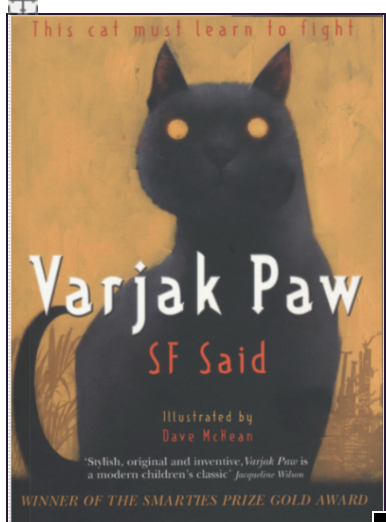
Our class reading book for this term will be ‘Varjak Paw’ by S.F Said. It is an exciting tale of a brave, young kitten who has to find his way in a city full of dangerous dogs, cat gangs. He also needs to discover what 'The Vanishings' are, and what they mean for Varjak and his family.
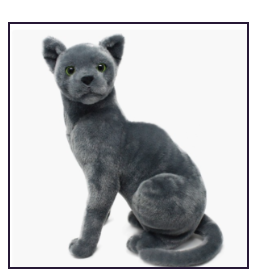
This is our class pet, Varjak Paw, named after our class book! He is already very loved!
We will also be reading and watching stories from other cultures.
Children will:
- Use causal connectives to develop their explanations.
- Use their, there and they’re correctly, in their writing.
- Use organisational devices within non-narrative writing such as headings and subheadings.
- Evaluate and edit by assessing the effectiveness of their own and others’ writing and suggesting improvements.
- Use inverted commas in direct speech in their writing.
- Use reported speech in their writing.
- Continue to practise weekly spellings linked to the year 3 & 4 spelling list.
Spelling: We will be focusing on the statutory year 3/4 spelling list and the spelling rules/ patterns connected with these spellings.
Reading: We will use 'Varjak Paw' to support comprehension skills. The children will also practice specific reading skills on a rotation 3-4 x a week, using a range of shorter fiction and non-fiction texts/ extracts linked with ancient civilisations, sound, and music history.
- Vocabulary choices and word meanings from the context of the text
- Inference
- Retrieval and explanation
- Sequencing
- Summarising
- Prediction
Maths
Children will continue to practise their times tables daily in preparation for their times tables multiplication check in June. There is an expectation that all children will work on TTRS at home to improve their times table fluency.
Children will:
- Identify and write tenths as decimals.
- Identify and write hundredths as decimals.
- Divide a 1- or 2-digit number by 10.
- Divide a 1- or 2-digit number by 100.
- Partition decimals.
- Compare and order decimals.
- Recognise halves and quarters as decimals.
- Convert between pounds and pence.
- Solve problems involving money.
- Convert between analogue and digital times.
- Convert to and from the 24-hour clock.
- Revise shape.
- Interpret charts and line graphs.
- Plot coordinates and translate shapes on a grid.
RE
Religion/Worldview: Why is there diversity of belief within Islam?
Children will learn about:
- What Sunnis believe.
- What Shia believe.
- How they are different.
- How Sufis behave differently from Sunni and Shia.
- What the roots of Shia are.
- What the roots of Sunni are.
- The sort of actions Sufis do to show their faith.
What does sacrifice mean?
Children will learn about:
- What sacrifice means and how it might feel.
- Reasons for sacrifice.
- What it means to sacrifice in different world religions, and in Humanism.
- Links we can make to other cultures or ancient traditions when it comes to sacrifice, e.g. Maya, Ancient Rome.
Science
Sound
Children will:
- identify how sounds are made, associating some of them with something vibrating
- recognise that vibrations from sounds travel through a medium to the ear
- find patterns between the pitch of a sound and features of the object that produced it
- find patterns between the volume of a sound and the strength of the vibrations that produced it
- recognise that sounds get fainter as the distance from the sound source increases.
Animals including humans
Children will:
- describe the simple functions of the basic parts of the digestive system in humans
- identify the different types of teeth in humans and their simple functions
- construct and interpret a variety of food chains, identifying producers, predators and prey.
Computing
Children will:
- Collect, analyse, evaluate and present data and information
- Continue to work and use technology safely and responsibly
- Use research tools.
History
How did trade and technology help the Sumerians build and maintain their cities?
- This term, children will be learning about one of the world’s earliest civilisations, Ancient Sumer. They will explore when and where the Sumerians lived, and learn about key events in Sumerian history.
- Children will investigate how the Sumerians built some of the first cities, focusing on the rise of urban life and the technologies that supported it. They will learn about important Sumerian inventions and developments, and consider how these helped people to organise, manage, and grow their cities.
- The unit will also explore the importance of trade. Children will find out what goods the Sumerians traded, where these goods came from, and how trade routes connected different regions.
- As part of their learning, children will be introduced to early writing systems, including Cuneiform. They will learn how writing was used for record-keeping and why it was important for managing cities and trade.
- Children will also explore religion in Sumerian society, including the role of temples such as Ziggurat, as well as the work of priests and the importance of religious beliefs in daily life.
Art and DT
Children will be looking at the artwork of the Ancient Sumer civilisation and will be making their own artworks inspired by these.
Children will be learning about micro-bits, and coding these.
PE
Children will learn skills and games linked with:
Cricket
Outdoor adventurous activities
Rounders
Athletics
French
Children will:
- Talk about journeys.
- Talk about the weather.
- Give opinions about food.
- Describe items of clothing.
Music
Children will use Charanga to:
- Understand the note length of semibreves, minims, dotted crotchets, crotchets, quavers, semiquavers and corresponding rests.
- Identify: • Stave • Treble clef • Time signature Identify and understand the differences between minims, crotchets, paired quavers and rests.
- Explore ways of representing high and low sounds, and long and short sounds, using symbols and any appropriate means of notation.
- Rehearse and learn to play a simple melodic instrumental part by ear or from notation.
Improvise using a range of musical instruments.